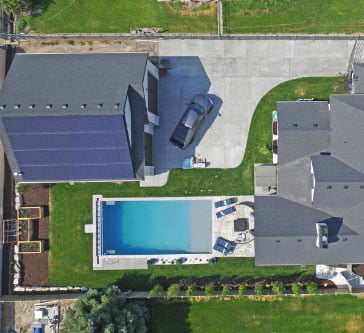
The use of solar power is now robust and common enough that it's found in several areas outside the original purpose of powering your home. One great example is the use of solar panels for electric car charging, which is becoming more and more common across the last few years.
At Intermountain Wind & Solar, we're proud to offer a wide range of solar power solutions to clients around Salt Lake City, Utah and Boise, Idaho areas, including solar EV charging stations and related solutions. A common question we get from clients interested in these products: How many solar panels are needed to charge an EV? Here are some of the chief factors that help answer this question.
For clients around Utah and Idaho alike, investing in solar EV charging stations is a smart move for several reasons:
Now let's look at some of the main factors that help determine how many solar panels are needed to charge an EV.
As you may have guessed, one of the top variables that influences how many solar panels are needed to charge an EV is the type of charger you use. Some chargers are more efficient than others, meaning they require less solar energy to charge your vehicle.
For example, a Level 1 EV charger typically requires about 3 kW of power to fully charge an electric car in 8-12 hours. This can equate to around 10-15 solar panels depending on their size and efficiency. On the other hand, a DC Fast Charger can provide up to 200 miles of range in just one hour, but it may require closer to 50 solar panels due to its higher energy demand.
The brand and specific model of charger is also important to note. This is one area where working with solar professionals is helpful, as they will be able to identify the ideal charger for your specific needs and solar setup.
Another chief factor to consider when determining the amount of solar panels needed for electric vehicle charging is the capacity of your vehicle's battery. The larger the battery, the more energy it will require to fully charge.
For example, a Tesla Model S has a battery size of 100 kWh and a range of approximately 370 miles on a full charge. This means that for each mile driven, approximately 0.27 kWh of energy is consumed. Therefore, if you drive an average of 40 miles per day, your vehicle would consume around 10.8 kWh per day.
Using this calculation, you can estimate how much additional energy will be needed from your solar panels to cover your daily driving needs. Most vehicles tend to take between 4-8 hours to charge fully, if you're also concerned with the timing of this process.
When it comes to how many solar panels you might need to install to facilitate daily EV charging from your home, another important variable is your average daily mileage. Different households drive different distances on a daily basis, so it's important to take this into consideration when planning your solar panel setup.
For instance, if you're only driving short distances for daily errands and work commutes, you may not need as many solar panels as someone who drives long distances frequently. It's always best to assess your own driving habits and research the energy consumption of your specific EV model to get a more accurate estimate of how many solar panels would be necessary for your needs.
If you're thinking about solar EV charging and wondering how many panels you would need, don't hesitate to reach out to Intermountain Wind & Solar. Our team of experts is here to help with these and all other solar power needs around Utah and Idaho. Contact us today!
As electric vehicles have become more common across the last several years, so has the increase in EV charging stations - including at home. Home EV chargers are becoming increasingly popular, particularly among homeowners who already own an existing solar panel system; what does the future hold here?
At Intermountain Wind & Solar, we're here to offer the very best solar energy services available around Salt Lake City, Utah and Boise, Idaho areas, including EV charger installation services to help power your electric vehicle with solar energy. EV charger products will only become more powerful and effective as technology continues to improve; here are some of the ways our experts expect it to evolve in the upcoming years.
One of the simplest ways that EV charger technology is expected to evolve is by becoming more readily available. And while this is certainly the case for public charger stations, the rise could be even starker for home EV chargers.
This is because, as electric cars become more prolific and mainstream, home charging stations are already starting to make more economic sense. As the cost of EVs decreases due to advancements in technology and increased competition, more people are now able to afford them. This will inevitably lead to a higher demand for at-home chargers.
Furthermore, with the development of wireless charging technology and more compact charger designs, home EV chargers have become even easier to install and use nowadays. This means that individuals who may have been hesitant about purchasing an electric car due to concerns about access to charging options no longer have this barrier.
Another area where experts anticipate significant growth in home EV chargers is in increased efficiency. As mentioned earlier, the cost of traditional fuel vehicles is on the rise, making electric cars a more attractive option for many consumers. In addition to this, advancements in battery technology have made it possible for EVs to travel longer distances on a single charge. This means that owning an electric car no longer has to be seen as a compromise when it comes to range and convenience.
And with a solar EV charger in place in your garage at home, this convenience is boosted even further. By harnessing renewable energy from the sun, EV owners can reduce their reliance on traditional electricity sources and save money on their overall energy bills.
One key way home EV chargers are expected to become more advanced is through expanded capacity. This means that chargers will be able to deliver more power at a faster rate, allowing EVs to charge in significantly less time.
This expanded capacity will also enable multiple vehicles to charge simultaneously, making it easier for households with more than one electric car. With the ability to deliver higher power outputs, home EV chargers will also become compatible with larger battery capacities, meaning that future generations of electric cars can take advantage of this technology and travel longer distances on a single charge.
Another possible advancement in EV charging technology is the development of wireless charging. This involves using electromagnetic induction to transfer energy from a charging pad on the ground to a receiver on the bottom of an electric car, eliminating the need for physical cords and plugs.
Wireless EV charging has already been successfully implemented in some public transportation systems, such as buses and trams. However, there are challenges that still need to be addressed before it can become widely available for personal electric cars. These include increasing efficiency and reducing costs associated with the technology.
However, once these obstacles are overcome, wireless charging could greatly improve convenience and accessibility for EV owners. The ability to charge without having to physically connect to a charger would make owning an electric car even more convenient than owning a traditional gas-powered vehicle.
Today, most commercially sold EV chargers take alternating current (AC) and turn it into direct current (DC) for storage, eventually moving this energy from the grid (which also includes your solar panel setup, in this setting) to your vehicle. But advances are also being made in vehicle-to-grid (V2G) technology, which would allow EVs to send energy back to the grid during peak times of demand.
This could help stabilize and balance the grid, reduce strain on power plants, and potentially even earn EV owners some extra money. These programs may also include features to slow the charging process for EVs to avoid using power during peak hours, helping stabilize the entire grid.
Overall, the advancements in electric vehicle charging technology are crucial for increasing the adoption and use of EVs. With faster charging times, wireless charging options, and V2G technology, owning an electric car is becoming more convenient and accessible than ever before.
At Intermountain Wind & Solar, we're here to help with all your EV charger installation needs around Utah and Idaho. Contact us today to learn more about our services and how we can help you make the switch to electric vehicles.
As both solar panels and electric vehicles have seen immense increases in popularity in recent years, the connections between the two are unavoidable. A common question in this realm: Can solar panels power your entire electric vehicle? The answer: Absolutely!
At Intermountain Wind & Solar, we're here to offer not only the very best solar panel installation services in Salt Lake City, Utah and Boise, Idaho areas, but also related services like EV charger installation and more. Here are some basics on how EV chargers work, some of the formats they're available in, and how your robust options today mean you can charge your vehicle entirely using solar power generated from these various sources.
For those just learning about EV chargers, here are some basics:
There are also a few different settings in which these can be found:
There are several key benefits to using solar power as a source of energy when charging electric vehicles. These include:
While certain companies or entities have done limited amounts of research or even basic R&D projects in the realm of attaching actual solar panels to vehicles themselves, this remains a relatively untapped market. Today's solar panel technology still requires a decently large capture space, for one; the fact that vehicles are regularly moving also introduces a whole range of new challenges.
Now, that's not to say that there may not come a day - perhaps even in the relatively near future - where electric vehicles can charge themselves even while driving. For the moment, though, charging needs to be done at one of the locations we went over earlier.
Do you need a home EV charger? There are a few factors that tend to make it a good option.
The first is how much cheaper and convenient it is to charge your vehicle at home compared to public charging stations. We estimate it’s about 2.5 to 3 times cheaper in this setting; here’s a breakdown of some basic numbers:
At Intermountain Wind & Solar, we're here to help with both solar installation and EV charger installation services for clients around SLC, Utah and Boise, Idaho areas. Contact us today to learn more or arrange services!
As more and more electric vehicles are hitting the road and taking up a larger share of the market in recent years, the need to charge these vehicles has also increased. One major trend here that doesn't look likely to abate anytime soon is the installation of electric vehicle chargers (EV chargers) in homes.
At Intermountain Wind & Solar, we're proud to offer a wide range of solar power and related services to clients around Utah and Idaho, including EV charger installations for both homes and businesses alike. We offer several varieties of EV charger, including Level 2 charging stations that are most common for homes. Here are some of the chief benefits of EV charger installation in your home.
One of the top reasons many of our clients choose to install EV chargers in their homes is the simple convenience factor. No longer do you have to worry about finding a public charging station or planning your route around where they are located.
With an EV charger at home, you can easily plug in your vehicle whenever it's parked and have it ready for use the next time you need it. This makes owning an electric vehicle much more practical and hassle-free.
Another major benefit of home EV charger installation is cost savings. While public charging stations may come with fees or higher electricity rates, charging at home can be done at a lower cost (especially if you have solar panels). Additionally, many electric utility companies also offer discounts or incentives for EV owners who install a home charger, further reducing the cost of charging.
By choosing to have an EV charger in your own home, you are reducing your carbon footprint and contributing to a cleaner environment. By using renewable energy sources like solar power to charge your vehicle, you are drastically reducing emissions from traditional fossil fuels.
For instance, according to the US Department of Energy, a typical EV with a 100-mile range charged by solar panels can reduce carbon emissions equivalent to planting about 120 trees per year. This not only benefits the environment but also helps improve air quality in your local community.
Installing an EV charger in your home can also increase its value. With the growing popularity and demand for electric vehicles, having a pre-installed charger can be attractive to potential buyers and add value to your property.
In fact, a study by Redfin found that homes with solar panels and EV chargers sold for an average of $22,000 more than similar homes without these features.
In many cases, public charging stations are "fast charge" options that tend to wear the battery of many electric vehicles out faster than a slower, at-home charge. By charging your vehicle at home with a Level 2 charger, you can extend the lifespan of your battery and save money in the long run on costly replacements.
In fact, you can often recoup the cost of an EV charger installation through longer battery life and savings on charging costs.
Another benefit of installing an EV charger in your home is the potential to pair it with an existing solar panel system. By utilizing clean, renewable energy from your own solar panels, you can further reduce emissions and lower the cost of charging your electric vehicle.
At Intermountain Wind & Solar, we offer customizable solar panel systems that can easily be integrated with an EV charger for maximum efficiency and savings.
If you're considering installing an EV charger in your home, here are some important factors to keep in mind:
Installing an EV charger in your home is a smart choice for convenience, cost savings, environmental impact, and even increasing home value. With the help of Intermountain Wind & Solar, you can easily make the switch to sustainable and efficient home charging for your electric vehicle. Contact us today to learn more about our EV charger installation services and how we can help you go green with solar power, whether you're in Utah or Idaho.
As the world of solar power continues to advance over recent years, gone are the days where simple power generation was the only service that solar panels could achieve. Two great examples of further innovations that are now often a central part of many solar power setups are solar home battery products and EV home charger solutions for the increasing array of electric vehicles found on the road today.
At Intermountain Wind & Solar, we're proud to offer an unmatched selection of solar home battery installation and EV charger installation services, including EV home chargers that can be integrated with any new or existing solar panel setup. As we enter 2025 and these technologies are as prominent as they've ever been in the solar energy world, let's run through some important concepts surrounding them as a guide to how you should be thinking about them.
For those who are unfamiliar, a solar home battery is essentially a large rechargeable battery that can store excess energy generated by your solar panels. This stored energy can then be used when your solar panels aren't generating enough electricity, such as during the night or on cloudy days. Essentially, it allows you to become more self-sufficient and rely less on the traditional power grid.
There are several benefits to investing in a solar home battery:
An EV home charger is a device that allows you to charge your electric vehicle at home. These chargers come in different sizes and speeds, with some able to fully charge your vehicle in just a few hours. They can also be integrated with your solar panel setup for even more sustainable and cost-effective charging.
Some reasons why investing in an EV home charger may be beneficial include:
One of the biggest benefits of both solar home batteries and EV home chargers is their ability to be integrated with solar panels. This means that the electricity used for charging your electric vehicle or powering your home comes from renewable energy sources, reducing your carbon footprint and furthering the transition to a more sustainable future.
For electric vehicles in particular, power demands can be high, making the use of solar energy even more important. By integrating an EV home charger with your solar panel setup, you can ensure that your electric vehicle is charged using renewable energy rather than fossil fuels.
As we enter 2025, there are a few key trends to keep an eye on regarding solar home batteries and EV home chargers:
If you're considering investing in a solar home battery or EV home charger, it's important to work with industry professionals who have experience and knowledge in these areas. At Intermountain Wind & Solar, we have a team of experts who can help guide you through the process and ensure that your setup is efficient, cost-effective, and meets all safety standards for either SLC, Utah or Boise, Idaho areas.
Don't hesitate to reach out to us for more information on how these technologies can benefit your home and contribute to a more sustainable future. Let's continue moving towards a world powered by renewable energy together!
Choosing the right professionals to carry out certain tasks is vital, and a great example here is any EV charger installation you're considering for your home. More and more owners of electric vehicles are installing EV home charger products in their homes that allow them to manage all their charging needs without utilizing public stations, and finding the ideal professionals for your installation is important.
At Intermountain Wind & Solar, we're here to help. We offer the best EV charger installation services you'll find around Salt Lake City, Utah or Boise, Idaho, plus experts who can integrate your EV charger with your solar panel setup if you have one. Here are some of the chief tips on how to research and decide upon the best EV charger installation professionals for your needs.
For a given EV charger installer to even be considered, they must have the relevant licensing and insurance for your area. This requires a bit of research on your part, but it's worth it to ensure that you're working with experienced, qualified professionals who follow industry best practices.
Simply put, any company or individual installer who cannot produce proper licensing and insurance documentation upon request should be avoided at all costs. This is often a sign of inexperience or a lack of commitment to the industry, and could lead to faulty installations or other issues down the line.
In addition to checking for licensure and insurance, you'll also want to ask any potential EV charger installation professionals for references. This gives you an opportunity to speak with previous clients and get a sense of the quality of work they received from the installer in question.
You can also check online reviews and ratings on third-party websites such as Yelp or Google Reviews. This will give you a well-rounded view of what other customers think about their experience with the company or individual.
When it comes to EV charger installation, experience matters. Look for installers who have been in business for a significant amount of time and have a proven track record of successful installations. Additionally, consider if they have any specialization in EV charger installations – this could indicate a deeper understanding and expertise in the field.
For instance, at Intermountain Wind & Solar, we have over 10 years of experience in the renewable energy industry and are a certified installer for multiple EV charger brands. This level of expertise allows us to provide superior installations and support for our customers.
While you don't want to choose an EV charger installer solely based on price, it's important to compare pricing from different options. This will give you an idea of the average cost for installations in your area and help you avoid overpaying.
However, be cautious of extremely low prices as this could be a sign of subpar materials or workmanship. It's important to strike a balance between cost and quality when making your decision.
In an emerging field like EV charger installation, it's important to fully understand the services being offered by any potential professionals. This includes whether they offer any warranties or ongoing maintenance options for your EV charger.
It's also important to ask about their process and timeline for installation so you know what to expect. And don't hesitate to ask any other questions that will help you feel confident in your decision.
There are several reasons why it's beneficial to work with a local EV charger installer. First, they will have a better understanding of the specific regulations and requirements in your area. They may also have established relationships with local utility companies which could lead to cost savings for you.
Furthermore, choosing a local professional means you'll have easier access to support or maintenance services in the future if needed.
Last but certainly not least, don't forget about the importance of good customer service. When it comes to any type of professional service, you want to work with someone who is responsive, transparent, and friendly.
Take note of how they communicate with you during your initial interactions – this can give you a sense of their level of professionalism and attention to detail. And don't be afraid to ask for clarification or additional information if needed.
Choosing the right EV charger installation professionals requires careful research and consideration. Be sure to prioritize licensure, references, experience and specialization, pricing, services offered, location, and customer service when making your decision.
At Intermountain Wind & Solar, we pride ourselves on providing top-notch EV charger installation services with a focus on customer satisfaction. Contact us today to learn more about how we can help you make the switch to electric vehicles in the most efficient and cost-effective way possible, whether you're in SLC, Utah or Boise, Idaho.
The rise in electric vehicle usage across the country and the globe has only continued within the past few years, and one trickle-down effect of this is the increase in EV home charger products seen across the sector. If you're considering installing an EV charger for your home, you have a few common options to choose between.
At Intermountain Wind & Solar, we're proud to offer not only a wide range of solar panel solutions for clients around Salt Lake City, Utah and Boise, Idaho areas, but also comprehensive EV charger installation and even integration with a solar panel setup (new or existing). Here are some basics on the levels of EV charger you'll typically find available today and how they differ, plus some tips on choosing between them based on your needs.
For our readers who are unfamiliar with EV chargers, these are devices designed to charge electric vehicles - they serve the same purpose as a traditional gas station, but for EVs. And while the earliest versions of EV chargers were exclusive to public areas, similar to gas stations, the last several years have seen a major uptick in home EV chargers that are installed on personal property.
In many cases, these devices are connected to an electrical panel and charge your vehicle using electricity from the grid. However, as we noted above, many solar panel arrays are also able to integrate with EV chargers, providing charging options that are both renewable and cost-saving.
Which "levels" of EV charger are available today? Our next few sections will dig into this.
The most basic level of EV charger, a level 1 charger, is essentially just an extension cord that plugs into a traditional three-pronged outlet in your home. These chargers will generally provide between 2-5 miles of range per hour of charging, meaning they're best suited for overnight charging situations or for emergency use when you can't find another option. They can take up to 20 hours for your vehicle to fully charge, depending on the make and power requirements.
It's important to ensure that the outlet you're using for a level 1 charger is on its own dedicated circuit - plugging other appliances or devices into it while charging your vehicle could cause a fire hazard. Level 1 chargers can also be integrated with solar panel systems.
The most commonly used EV chargers today are level 2 chargers, which require a proper 240-volt outlet like the one your dryer might use. These chargers generally offer between 10-60 miles of range per hour of charging time, so they're much more efficient than level 1 options.
They also come in various amperage levels to accommodate different vehicles' power needs and can be installed both indoors and outdoors. Level 2 chargers can also be integrated with solar panels, offering even more environmentally-friendly charging options.
The most advanced and powerful EV charger option available to date is the level 3, or DC fast charger. These chargers are typically only found in public areas due to their high power output and cost, but they provide significantly faster charging times - up to 80% of a full charge in as little as 30 minutes, depending on your vehicle's capabilities.
However, not all electric vehicles are compatible with level 3 chargers, so it's important to check before using one.
When deciding between these different levels of EV charger for your home or property, there are a few factors you should consider:
Another consideration for EV charger installation is potential integration with smart home technology. Many level 2 chargers come with options for monitoring and controlling charging times remotely, which can help save on energy costs and allow you to take advantage of off-peak electricity rates.
In short, there are many factors to consider when selecting an EV charger for your home or property, but the options available today make it easier than ever to find a solution that fits your specific needs. At Intermountain Wind & Solar, we're dedicated to helping our clients navigate this process and find the perfect EV charging setup for their lifestyle and budget, plus provide the best EV charger installation services you'll find in SLC, Utah or Boise, Idaho. Contact us today to learn more about our services and how we can help you!


"All of the photos on this website are of real projects that Intermountain Wind & Solar has designed and installed.
We are proud to show off and stand behind our work."