
If you own a commercial building in Utah or Idaho and you've been thinking about solar for "sometime in the next year or two," the window to lock in today's full federal tax credit just got a hard ceiling on it.
The IRS issued Notice 2025-42 in August 2025, and it changed the rules on the 30% Federal Investment Tax Credit for commercial solar. The short version: if your project starts physical construction by July 4, 2026, you keep the full 30% credit even if you don't flip the switch until 2030. If you start construction after that date, you have to be operational by December 31, 2027 — or the credit goes to zero.
For a $500,000 system, that's a $150,000 swing. For a $1M system, $300,000. This isn't invented marketing pressure. It's tax code.
We're nine weeks out. Here's what every Utah and Idaho commercial owner needs to understand about the current commercial solar safe harbor before it closes — and what your options look like on either side of that deadline.
When most people hear "begin construction by July 4," they picture a backhoe in the dirt. That's not what the IRS means.
The IRS uses a physical-work-of-significant-nature test. The work can happen on-site or off-site. Manufacturing of custom racking, fabrication of step-up transformers, ordering and beginning manufacture of inverters — these can all qualify as "beginning construction" if structured correctly with the right contracts and documentation.
A few critical details from Notice 2025-42 that catch owners off guard:
Plain English: "beginning construction" means real, documented physical work — and that can include off-site fabrication of your project's custom equipment, not just shovels in the dirt. The catch is that it has to be continuous after it starts, and the paperwork has to survive an audit. This is exactly where having an experienced commercial solar contractor matters.
Properly documenting the safe harbor — the contract, the supplier's commitment, the delivery, the work performed — is the difference between a $150K tax credit and a very expensive lesson during an audit. The IRS doesn't care about your intent. They care about your file.
Here's a side-by-side at two common commercial system sizes in Utah, with the full incentive stack applied:
| Line Item | $500K System | $1M System |
|---|---|---|
| Gross project cost | $500,000 | $1,000,000 |
| Federal ITC (30%) | −$150,000 | −$300,000 |
| Utah RESTC (10%, capped at $50K) | −$50,000 | −$50,000 |
| MACRS depreciation savings (5-yr, ~21% blended) | ~−$85,000 | ~−$170,000 |
| Effective net cost | ~$215,000 | ~$480,000 |
That effective cost is what you pay to lock in 25+ years of generation at a fraction of utility rates. A typical commercial payback in our service area lands between 4 and 7 years, depending on rate class, system orientation, and how much of your generation offsets on-site consumption versus exports.
After payback, you're producing electricity for essentially the cost of inverter replacements every 12-15 years.
That's the bull case. After July 4, that math gets harder for any project not already under construction — because losing the 30% credit pushes most commercial paybacks out 2-3 years.
The Utah commercial solar conversation got more interesting on April 28, 2026.
The Salt Lake City Council voted unanimously to opt into Rocky Mountain Power's Community Clean Energy Program, the largest of the 19 eligible Utah communities to do so. Per KSL's reporting, medium-sized office buildings will see roughly a 5% increase on the typical monthly bill starting in early 2027. Residential customers see $4/month added. Businesses can opt out — free for the first six months after notification, $30 after that — but the directional signal matters more than any one rate increase.
Rates aren't going down.
Here's the rest of the Utah commercial solar incentive picture:
For Utah commercial owners — especially anyone in Salt Lake County — the pencil sharpens further every time the utility raises rates. The ITC is the lever you control. The rate environment is the one you don't.
Idaho doesn't offer a state-level ITC equivalent, but the federal incentives still anchor the math, and there are state-level levers worth using:
For Idaho commercial owners — particularly in Boise, Idaho Falls, Twin Falls, and the agricultural irrigation corridor — the federal ITC is the dominant economic lever. The same July 4 deadline applies. The same physical-work test applies. The same safe harbor strategy applies.
Here's how a serious commercial solar project sequences from today through the July 4 deadline:
Weeks 1-2 — Site assessment and bill analysis
Power bill review, roof or ground-mount feasibility, preliminary system sizing against actual consumption (not nameplate hopium), and an effective-cost number you can take to your CFO.
Weeks 2-5 — Engineering and utility interconnection application
Detailed engineering, interconnection application filed with Rocky Mountain Power or Idaho Power, structural review for roof-mount projects.
Weeks 5-7 — Equipment procurement order
This is where the safe harbor gets satisfied. Contracts in place, equipment ordered, manufacture commenced, delivery scheduled. Documentation rigorous enough to survive an audit.
Weeks 7-9 — Permit submission and safe harbor documentation
Final permits filed, safe harbor file assembled (contracts, invoices, proof of physical work, supplier attestations).
Post-July 4 — Install on your business schedule
Once safe harbor is locked, you have up to four years (through 2030) to complete construction and energize. The pressure is gone. You install when it makes sense for your operation — not when an arbitrary calendar says you have to.
That timeline is achievable if you start now. It is not achievable if you start in June.
Inverter lead times have already extended approximately three weeks since January 2026. Panel availability is next. Every commercial installer in the country is seeing the same calendar we are, and they're all fighting for the same hardware.
By June, the projects that ordered equipment in April and May will be set. The ones that waited will be on backorder, hoping the manufacturer hits their window — and "hoping" is not a safe harbor strategy.
We've reserved a finite quantity of inverters and panels for projects that commit by mid-June. After that, allocation closes and we're in the same scrum as everyone else.
After July 4, 2026, the conversation changes from "lock in 30%" to "build, energize, and pass commissioning by December 31, 2027." That's a much harder sell on any project bigger than a single-rooftop installation.
For a commercial owner whose project sequencing slips even six months past July 4 — utility delays, equipment delays, weather, permitting — the entire 30% federal credit can evaporate. Not reduced. Gone.
The companies that act before July 4 keep their option to install for the next four years at today's credit. The ones that wait have 18 months to get it done. Every step in that 18-month window has to go right, with zero buffer.
We're an in-house engineering and install operation, headquartered in Centerville, Utah, serving Utah and Idaho commercial owners. We've sized commercial-scale systems across both states, we run point with Rocky Mountain Power and Idaho Power on interconnection, and we have the equipment allocation to actually deliver inside the safe harbor window.
We'll also tell you when solar doesn't make sense for your building. We've turned down jobs. We're not interested in selling you a system you'll regret in year three.
The free safe harbor assessment is 30 minutes. You bring 12 months of power bills. We tell you:
If the answer is no, we'll tell you. If the answer is yes, you'll have the numbers to make a decision before July 4.
Schedule your free safe harbor assessment →
Doug Shipley is the founder of ShipleyBI and a long-time operator at Intermountain Wind and Solar, headquartered in Centerville, Utah. IWS has installed commercial and residential solar across Utah and Idaho since 2008, with in-house engineering, NABCEP-certified design, and a BBB A+ rating.
This article is for informational purposes only and does not constitute tax or legal advice. Confirm your project's specific eligibility for federal and state incentives with your CPA or tax counsel.





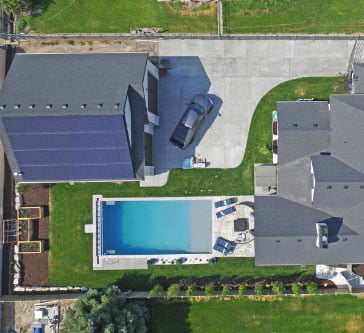
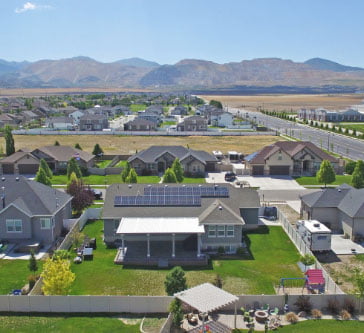
"All of the photos on this website are of real projects that Intermountain Wind & Solar has designed and installed.
We are proud to show off and stand behind our work."