
When extreme weather hits the Mountain West, having a reliable home battery system ensures your family stays safe and comfortable. A critical load backup system keeps your most essential electrical circuits running during a power outage, while a whole-home solution powers your entire property seamlessly. Deciding between these two strategies comes down to your energy habits, budget, and power priorities.
If you are ready to secure your energy independence, Intermountain Wind & Solar offers tailored energy storage design and professional Tesla Powerwall installation for homeowners across Salt Lake City, Utah, and Boise, Idaho. Contact us today to learn more, or to schedule an appointment for a home backup installation!
The primary distinction between storage configurations is how electrical loads are wired. During a grid outage, a critical load backup system isolates key sub-panels to preserve power for high-priority appliances. Whole-home systems automatically step in to power your primary distribution panel without requiring circuit selection.
A critical load system typically powers standard 120-volt circuits. This includes refrigeration, LED lighting, Wi-Fi routers, home security systems, and phone chargers. In areas with cold winters like Salt Lake City or Boise, it can also maintain gas furnace blowers to keep your living space warm.
Whole-home backup covers every circuit in your electrical main panel. This allows you to run high-draw 240-volt loads such as central air conditioning, electric clothes dryers, heat pumps, water heaters, and electric vehicle chargers.
Powering selected circuits requires far less energy storage than keeping an entire home running. A single battery unit, offering 10 kWh to 13.5 kWh of capacity, easily handles a critical load backup setup for 24 hours or longer when paired with residential solar panels.
Whole-home systems demand significantly more continuous output and surge capacity. Starting large appliances like central AC units creates high instantaneous power draws. To support these surges and daily household consumption, whole-home setups typically require two to four stacked battery units, pushing total storage capacity to 27 kWh or more.
| Feature | Critical Load Backup | Whole-Home Backup |
| Circuit Coverage | Selected essential sub-panel circuits | Entire main electrical panel |
| Typical Battery Units | 1 Battery Unit (10–13.5 kWh) | 2–4 Battery Units (27–50+ kWh) |
| Heavy Load Support (AC, EV) | Restricted or Off | Full Support |
| Hardware & Install Costs | Lower upfront investment | Higher upfront investment |
| Energy Management | Hands-off, low consumption | Active app monitoring recommended |
Choosing a partial setup reduces initial hardware expense because you purchase fewer battery modules. However, the installation requires an electrician to install a dedicated critical loads sub-panel and re-route target circuits. This step adds labor time but lowers overall equipment investment.
Whole-home installations require more equipment capital but skip circuit re-routing. Installers place a smart gateway between your electric meter and main breaker panel. This gateway instantly detaches your entire house from the grid during an outage without requiring sub-panel rewiring.
Energy management also differs between the two choices. With partial backup, energy management is built directly into the wiring panel, preventing heavy loads from draining your reserves. Whole-home systems rely on smart software controls where homeowners monitor usage via mobile apps to manually drop non-essential loads during extended grid disruptions.
Selecting the ideal energy backup configuration depends on your budget, daily routines, and regional weather hazards. Homeowners who want budget-friendly security during utility disruptions often favor essential circuit coverage. It keeps food fresh, communication active, and basic lighting running without overspending.
If your family relies on medical equipment, works remotely full-time, or wants uninterrupted central cooling during hot summer afternoons, a whole-home system offers complete peace of mind. It eliminates the need to compromise on comfort during power outages.
Intermountain Wind & Solar helps homeowners across Salt Lake City, Utah, and Boise, Idaho, design custom solar and battery storage solutions tailored to their exact energy needs. Contact our experienced local installation team today to evaluate your home and receive a customized backup power quote.





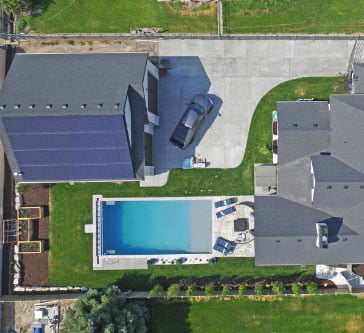
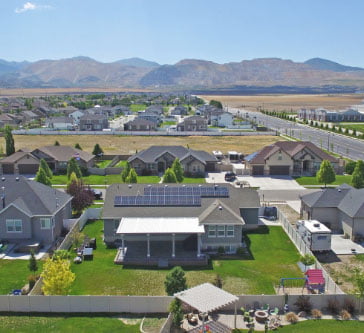
"All of the photos on this website are of real projects that Intermountain Wind & Solar has designed and installed.
We are proud to show off and stand behind our work."