Although you may have heard talk that roof leaks can develop after installing solar panels, this definitely isn’t the case. Leaking almost never happens – at least when a highly-experienced licensed solar contractor handles the installation.
When a photovoltaic array is mounted properly, the integrity of the rooftop is not compromised. And, although the mounting hardware might require penetration of the roofing materials, an expert contractor – like the team at Intermountain Wind & Solar – always takes precautionary steps to prevent roof leaks.
No reputable solar contractor will agree to install a photovoltaic array on a roof that appears to be in poor condition. If the rooftop is already compromised and likely to leak, adding solar panels could be the straw that breaks the camel’s back, so to speak.
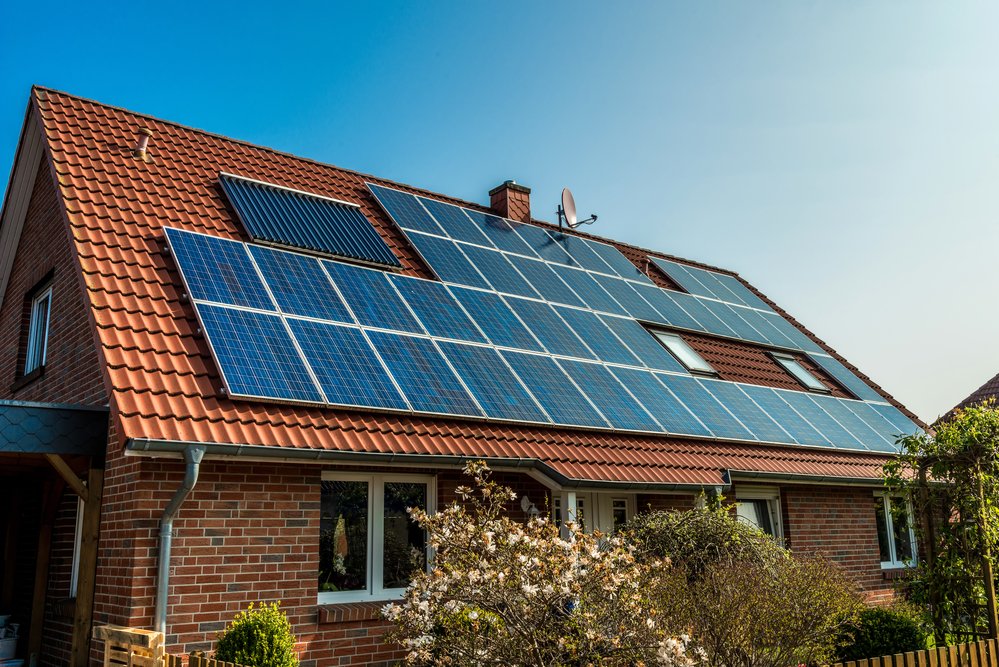
To further prevent the possibility of roof leaks, contractors surround the mounting bolts with flashing and then completely seal the rooftop penetrations. Sealant is applied to both the flashing and the areas around the drilled holes, and this works to block water from getting through.
It may sound counterintuitive, but mounting rooftop solar panels can actually protect the roofing surface and decrease the chance of roof leaks.
Normally, your rooftop is constantly exposed to the elements, and years of harsh weather can cause the surface to deteriorate. When that happens, leaking becomes more likely. But a rooftop with a photovoltaic array is less exposed to the elements and the often harsh Utah weather. This lessens the amount of damage the roofing material experiences over time. And, with less damage, roof leaks become less probable.
As we mentioned above, installing a rooftop photovoltaic array almost never causes leaking. But occasionally, leaks occur and, when they do, it’s because the roof wasn’t structurally sound at the time of installation.
Qualified solar contractors can spot clear signs of damage, but problems in the roof deck, frame and sheathing aren’t always obvious. For that reason, if you’re at all concerned about leaking, you should consult with a professional roofer before scheduling the installation of your photovoltaic array.
If your rooftop needs extensive repairs to handle solar panels – or, worse, the roofer says you need a new roof – you can explore other options. Mounting the photovoltaic array on a different property structure, such as a carport or garden shed, could be the perfect solution. Or, you may want to install a ground-mounted solar system. Either way, producing enough energy to power your home won’t be a problem.
At Intermountain Wind & Solar, the leading renewable energy provider serving Utah, Oregon, Idaho and Wyoming, we take great care with every photovoltaic installation. Choose us, and our in-house staff will design and install a cost-effective rooftop or ground-mounted solar array that maximizes your energy savings.
Intermountain Wind & Solar makes it easy for Intermountain West homeowners to make the switch to photovoltaic power. To schedule a free, no-pressure consultation to chat with our expert team about installing solar panels, contact us today.
Intermountain Wind & Solar’s full-time installers use UL-listed flashing kits that meet or exceed most shingle manufacturer specs, so over 3,000 rooftop systems in Utah, Idaho, Wyoming, and Oregon have retained original roof warranties. Always confirm with your shingle maker and review our permit-grade documentation.
Our in-house installers apply industry-approved EPDM flashing and torque-spec fasteners at every roof penetration, creating a watertight barrier beneath solar rails. Since 2008, we’ve completed 5,000+ installations in the Intermountain West without a single leak claim linked to our mounting hardware.
Asphalt shingle and standing-seam metal roofs account for 80% of our projects in Utah and Idaho, offering uniform surfaces and natural water-shedding angles. Tile or slate roofs require custom tile hooks and additional membrane layers, which we design in-house to maintain 100% leak protection.
Intermountain Wind & Solar recommends annual inspections, including seal checks at all 20–30 mounting points per 10-kW system. Our inspections start at $150 and cover EPDM flashing, rail alignment, and gutter clearance. Call us to schedule your next roof and solar health check.





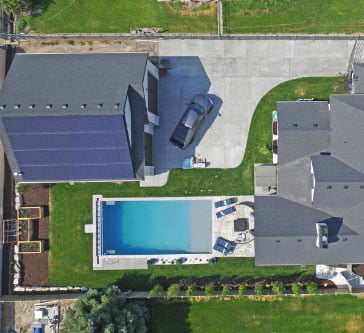
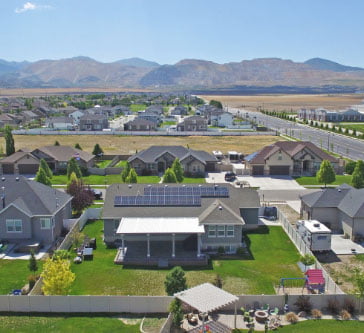
"All of the photos on this website are of real projects that Intermountain Wind & Solar has designed and installed.
We are proud to show off and stand behind our work."