There are several direct ways that the increasing use of solar power has improved parts of our society, and one great example across numerous cities is the role solar plays in reducing grid congestion and emissions. Solar's environmental impact is felt in many ways, and this is just one of them.
At Intermountain Wind & Solar, we're proud to offer a wide range of commercial and residential solar power services to clients around Salt Lake City, Utah and Boise, Idaho areas. We regularly help clients understand the full scope of benefits that come with going solar, both for your own property and for the environment in general. Here are some basics on how solar helps reduce local grid congestion and emissions, plus related information on solar's environmental impact.
When it comes to solar's environmental impact, some of the most important factors to consider are its ability to reduce emissions and offset carbon. Solar power is a renewable energy source, meaning it doesn't rely on finite resources like fossil fuels. This makes it a much more sustainable option for meeting our energy needs.
But how exactly does solar help reduce emissions? By generating electricity from the sun's rays, solar panels produce clean energy that doesn't emit harmful pollutants into the air. This results in fewer greenhouse gases being released into the atmosphere, which contributes to reducing global warming and climate change.
Furthermore, solar power is often used as a primary form of what's known as carbon offset. Carbon offset is a way to counterbalance the carbon emissions produced by traditional forms of energy production, such as burning fossil fuels. By using solar power, we can reduce our reliance on these harmful energy sources and actively work towards reducing our carbon footprint.
This is especially important in today's world, where the negative effects of climate change are becoming increasingly apparent. From extreme weather events to rising sea levels, the consequences of our actions are undeniable. By transitioning to solar power on a larger scale, we can help mitigate these effects and create a more sustainable future for ourselves and generations to come.
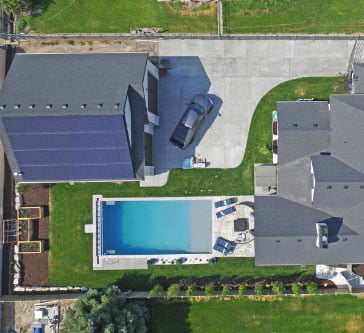
Solar panels on individual properties are top examples of what are known in the energy world as distributed energy resources, or DER. DER products produce a supply of power on a small scale, unlike the traditional large-scale power plants that distribute energy to an entire region.
These distributed resources offer a wide range of benefits to our energy system, such as increased reliability and flexibility. By producing electricity closer to where it is consumed, DER products reduce the need for costly grid infrastructure upgrades and transmission losses.
In fact, around a third of all solar energy in the US is produced as DER, and this number is only expected to grow in the coming years. This increased investment in DER products has also led to advancements in technology and cost reductions, making them even more accessible to consumers.
One of the most significant benefits of DER products is their role in promoting sustainability and reducing carbon emissions. With renewable energy sources such as solar, wind, and hydro power being used as the primary source for many DER products, they play a crucial role in mitigating climate change.
In many cases, DER products like solar panels also have the potential to reduce demand on local grids. This is achieved by generating electricity on-site and reducing the need for energy to be sourced from traditional power plants.
For example, in areas with high solar adoption rates, such as California, there has been a noticeable reduction in peak load demand on the grid during sunny days. This is because distributed solar systems are generating electricity directly where it is needed, rather than relying on transmission lines from distant power plants.
This reduction in demand has not only helped to stabilize local grids but also reduces strain on existing infrastructure, delaying or avoiding costly upgrades that would otherwise be necessary. As a result, DER products can play a significant role in creating more efficient and resilient energy systems.
At Intermountain Wind & Solar, we're here to help clients around Utah and Idaho obtain maximum benefits from solar power, including solar's environmental impact and ability to reduce local grid congestion and emissions. Contact us today for a personalized consultation to learn more about the potential of DER products in your energy system.





"All of the photos on this website are of real projects that Intermountain Wind & Solar has designed and installed.
We are proud to show off and stand behind our work."