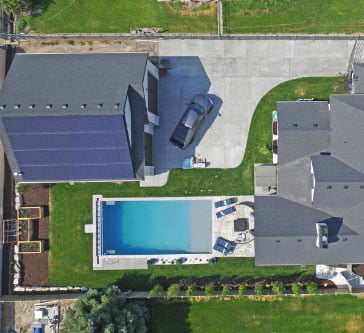

Solar panels are an excellent way to capture clean energy, but pairing them with home battery backups unlocks complete control over your home’s power. Homeowners can maximize the value of solar energy storage by strategically managing load consumption, aligning battery usage with utility rate structures, and actively monitoring system performance. Implementing these targeted practices allows you to slash monthly utility bills while maintaining reliable backup power during unexpected grid outages.
At Intermountain Wind & Solar, we specialize in helping property owners optimize their solar energy systems. Whether you live near Salt Lake City, Utah, or Boise, Idaho, our local team is ready to design and install high-performance equipment tailored to your household. Contact Intermountain Wind & Solar today to request a custom consultation for your home!
To get the most out of your setup, timing is everything. Shifting electricity usage to periods when battery power is available ensures that your home runs on stored clean energy rather than expensive grid power.
During peak daylight hours, your solar panels generate abundant electricity. Excess power charges your solar energy storage system for later use. By scheduling high-draw activities—such as running the dishwasher, running pool pumps, or washing laundry—for the evening when battery power is full, you minimize reliance on the local grid.
During grid outages or high-cost utility hours, managing your household energy demands prevents rapid battery depletion. Prioritizing essential appliances and high-energy loads effectively protects critical devices while extending the life of your stored reserve.
Setting up dedicated critical load subpanels allows your home to automatically direct battery power where it matters most during a blackout.
| Load Category | Recommended Appliances | Energy Strategy |
| Essential Loads | Refrigerators, medical equipment, lights, Wi-Fi routers | Continuous power allocation during outages. |
| Flexible Loads | Dishwashers, laundry machines, EV chargers | Run during peak solar production or off-peak hours. |
| Non-Essential Loads | HVAC booster units, heated pools, and decorative lighting | Automatically shed or restrict during emergency grid failures. |
By grouping devices, you prevent heavy power surges from draining your reserves unexpectedly.
Modern energy systems come equipped with intelligent mobile monitoring tools. Monitoring battery performance and adjusting energy usage habits over time helps you identify baseline consumption trends and detect unexpected power drains.
Reviewing real-time production and storage data offers several key benefits:
Consistent habits paired with active monitoring keep your solar energy storage working at peak efficiency year after year.
Utility companies across Utah and Idaho increasingly use Time-of-Use (TOU) rate structures. Under these programs, electricity costs significantly more during late afternoon and early evening hours when regional demand peaks.
Taking advantage of time-of-use utility rates, where available, allows you to discharge your solar energy storage when grid power is most expensive. Instead of purchasing costly peak electricity, your home draws seamlessly from your battery reserve. Once grid rates drop back down during off-peak night hours, your system can stand by or charge using low-cost energy if needed. This strategy, known as rate arbitrage, delivers significant savings on your monthly power bills.
Adding a battery backup transforms your home into a self-sustaining power hub. By shifting load timing, organizing critical circuits, tracking performance metrics, and capitalizing on local utility rate schedules, you unlock the complete potential of your solar energy storage.
Duration depends on battery capacity and household power consumption. By powering essential appliances like refrigeration and basic lighting, a standard solar energy storage system can sustain a home for 24 hours or longer during an outage.
Yes, most grid-tied solar systems can be retrofitted with battery backups. Our technicians evaluate your existing inverter and wiring to integrate a seamless storage option.
Cold temperatures in Salt Lake City and Boise can temporarily decrease battery efficiency. Installing batteries in climate-controlled spaces like insulated garages helps maintain optimal operating conditions year-round.
Intermountain Wind & Solar provides complete renewable solutions engineered specifically for mountain west climates. If you are ready to secure energy independence for your home in Salt Lake City, Utah, or Boise, Idaho, contact the team at Intermountain Wind & Solar today for a complimentary quote.





"All of the photos on this website are of real projects that Intermountain Wind & Solar has designed and installed.
We are proud to show off and stand behind our work."