
Power outages can disrupt daily life and create stressful situations for homeowners. When planning for emergency power, you generally find yourself choosing between traditional fossil fuel systems and modern energy storage setups. Understanding how these systems perform over time helps you select the right solution for your property.
If you are trying to navigate the choice of a solar battery backup vs a generator, Intermountain Wind & Solar offers professional guidance and tailored installations across Salt Lake City, Utah, and Boise, Idaho. Investing in a solar battery backup provides a seamless transition to emergency electricity when the traditional utility grid fails. Our expert team is ready to help you evaluate your options and find the perfect fit for your home.
Both options are generally reliable if they are purchased from reputable vendors. High-quality engineering ensures that your household stays safe and powered when the municipal grid drops out unexpectedly.
Batteries respond instantly to grid failures through automatic internal transfer switches. Generators also deliver robust performance but sometimes require a brief delay to engine startup before electricity flows to your appliances. Working with established professionals guarantees that either technology will perform its core function when standard utility power disappears.
Choosing how to power your backup system changes your daily operational requirements during a prolonged crisis. Traditional mechanical systems demand a continuous supply of external fuel to keep running. Energy storage systems utilize natural elements to maintain household functionality without relying on commercial supply chains.
Operational differences extend far beyond how each system generates or stores its electricity. Homeowners must consider daily environmental impacts, noise levels, and required physical oversight. These factors alter the ownership experience over the lifespan of the equipment.
Financial planning requires looking past the initial purchase price to understand true operational expenses. The following chart outlines basic financial expectations over a decade of standard residential operation.
| Financial Factor | Generator System | Solar Battery Backup |
| Upfront Installation | Moderate | Higher |
| Fuel Costs | Ongoing Expense | Zero |
| Periodic Maintenance | Required | None |
| Lifespan Expectations | 10 to 12 Years | 10 to 15 Years |
Integrating an energy storage unit transforms a standard grid-tied residential solar array into a completely self-sufficient powerhouse. Standard solar installations automatically shut down during blackouts to prevent sending dangerous current back downed power lines. Adding a dedicated battery storage unit solves this safety issue by creating an isolated home microgrid.
Your panels can safely generate power in the daytime while sending all excess electricity directly into your dedicated battery banks. This cycle repeats indefinitely as long as the sun continues to shine each morning. Homeowners gain true peace of mind knowing their critical appliances will run smoothly without any reliance on fossil fuel availability.
Choosing the right emergency system ensures your home remains safe during any regional utility crisis. Intermountain Wind & Solar provides premier energy storage installations throughout Salt Lake City, Utah, and Boise, Idaho, to keep your household running smoothly. Reach out to our professional team today to secure a dependable power configuration for your property.





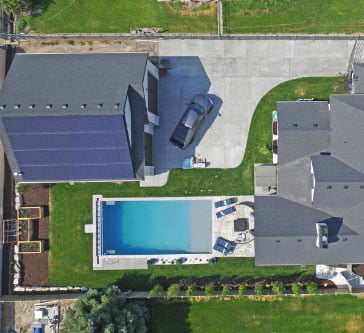
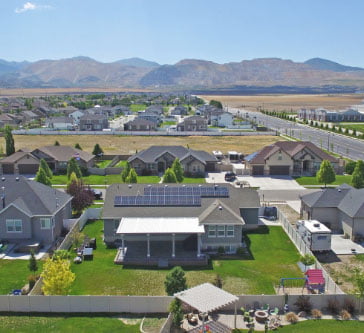
"All of the photos on this website are of real projects that Intermountain Wind & Solar has designed and installed.
We are proud to show off and stand behind our work."