Leasing solar panels can sound like a great way to make the switch to home photovoltaic power, especially if you’re on a tight budget.
With no money down and promises of big savings on electricity, a solar lease can sound like the perfect scenario for many cash-strapped homeowners.

And therein lies the problem. Leases sound much better than they actually are. In reality, leasing a photovoltaic system comes with several hidden costs and disadvantages — many of which you might not learn about until it’s too late.
Naturally, you expect your electricity bills to go way down with a solar lease; but don’t hold your breath. Although leasing solar panels will reduce your home energy costs, your bill probably won’t drop as much as you expect it to.
Let’s say your photovoltaic system generates the equivalent of $100 in electricity every month. That doesn’t mean you’ll save $100 every month.
In most cases, solar leasing companies sell electricity to their customers at a reduced rate. For example, you might end up paying a $50 monthly utility bill, even if your photovoltaic panels create far more power. The extra savings go to the leasing company — not to you.
Are you looking forward to claiming the lucrative federal solar tax credit — equal to 30 percent of your system cost? Your state and municipality may also offer some impressive financial incentives. With these perks, some customers save up to 50 percent of their total investment costs for installing solar panels.
Unfortunately, you won’t get to pocket these savings if you choose a solar lease. Tax credits, grants and rebates go to the photovoltaic system owner. If you lease, that won’t be you — it will be the leasing company.
A solar lease usually lasts 15 to 20 years. If you want to sell your house, you’ll have to find a willing buyer with stellar credit to take over your solar lease agreement.
For many leasing customers, this is next to impossible.
If you can’t find a buyer willing to commit to years of payments to a leasing company, you will have to buy out the remainder of the contract in one lump sum. And even after you write that big check, you still won’t own the photovoltaic panels.
Fortunately, leasing solar panels is not the only way to adopt photovoltaic power with no money down.
Many solar lenders don’t require a down payment. Various affordable financing options are available, allowing you to take ownership of your photovoltaic system and reap all the rewards.
Purchasing your photovoltaic system means you get the full savings on your monthly electricity bills. It also means you’ll get to take advantage of the federal tax credit and other financial incentives for going solar. And it means you’ll own your system, so when it’s time to sell the house, you have an amenity that will attract buyers rather than scare them off.
The professionals at Intermountain Wind & Solar serve homeowners throughout Idaho, Utah and Wyoming. We can help you understand all of your budget-friendly financing options. Contact us today so we can show you exactly how you can afford the switch to photovoltaic power, without resorting to leasing solar panels.
In Utah and Idaho solar leases often include annual escalator fees around 2.9%, maintenance charges of $250 per year, and buyout fees up to $12,000 after five years. These costs can add 10–15% to the total lease expense over a 20-year term.
Homeowners who lease solar panels cannot claim the 26% federal Investment Tax Credit (ITC). This credit, worth up to $9,120 on an average Utah system priced at $35,000, instead goes to the leasing company, reducing your long-term savings by that amount.
In Wyoming and Oregon, early buyout fees average 60% of the original system cost after five years. For a $30,000 lease, that means roughly $18,000 to purchase the panels, plus potential $500 in administrative fees.
Solar leases transfer with property sales but often require buyer approval and credit checks. In Idaho, 78% of buyers request lease buyouts to avoid escalator clauses, adding an average $7,000 cost or extending closing timelines by 30 days.
An escalator clause in a solar lease is an annual rate increase—usually 2–3% in Utah—that raises your base lease payment each year. Over 25 years, a 2.5% escalator can cut net savings by over $5,000 on a 6 kW system compared to fixed-rate ownership.





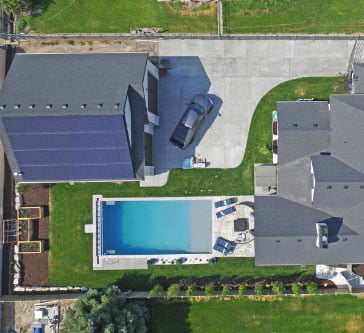
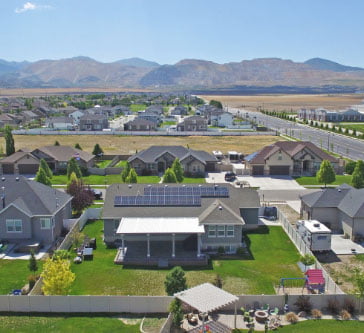
"All of the photos on this website are of real projects that Intermountain Wind & Solar has designed and installed.
We are proud to show off and stand behind our work."