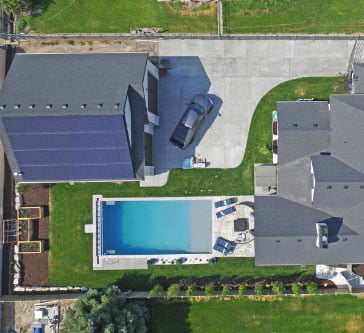

Investing in a solar array is one of the smartest decisions a homeowner can make to lower utility costs and achieve energy independence. During the brightest hours of the day, your rooftop panels often generate far more electricity than your household appliances actually consume. Many homeowners wonder what happens to this excess solar energy when there is no dedicated storage system in place to capture it. Understanding how your system interacts with the local electrical grid ensures you maximize your long-term return on investment.
If your system is not equipped with a physical backup system, your power flows directly into the municipal electrical infrastructure to support your community. Homeowners exploring residential solar power can count on Intermountain Wind & Solar to design custom systems across Salt Lake City, Utah and Boise, Idaho. By partnering with Intermountain Wind & Solar, you gain a trusted advisor to help navigate the financial implications of managing your surplus production. Discover how your system can operate efficiently by reviewing the comprehensive breakdown of grid interactions detailed below, or learn more by visiting our dedicated residential solar power resource page.
When the sun is shining directly on your roof, your photovoltaic panels operate at peak production capacity. If your household is empty or running low-power appliances, a large volume of excess solar energy is created instantaneously. Because electricity follows the path of least resistance, this unused power moves backward through your electrical panel. It exits your home through your main utility meter and enters the local power lines to feed nearby properties.
Without a local backup system, your home cannot hold onto this clean energy for later use. The grid essentially acts as an immediate recipient for every single watt of surplus electricity your system creates. This seamless transfer happens automatically without requiring any manual adjustments or switching mechanisms from the homeowner. Your system remains safely tied to the utility network to ensure continuous power delivery regardless of weather changes.
Net metering is a billing mechanism that tracks the movement of electricity between your home and the public utility grid. When your system sends excess solar energy out into the neighborhood, a specialized bidirectional meter records the exact volume exported. When your panels stop producing power at night, you automatically pull electricity back from the utility network. Your monthly bill reflects the net difference between the energy you supplied and the energy you consumed.
This program allows homeowners to utilize the public grid like a virtual storage network without buying equipment. The credits you accumulate during peak daylight hours help offset the costs of the power you draw during the evening. This balance helps minimize your monthly utility obligations and shortens the payback period of your initial system investment. However, the exact financial benefit depends heavily on the specific policy guidelines established by your regional utility provider.
While grid export programs offer great financial relief, utility policies are evolving rapidly across the nation. Homeowners must understand that these public programs come with specific structural limitations that alter long-term financial outcomes. Relying solely on the grid means you are subject to changing utility rules that can impact your monthly savings.
Many utility companies no longer compensate homeowners at the full retail rate for the power they export.
Adding a physical storage unit changes how your system handles daytime production. Instead of sending every surplus watt directly to the utility company, you retain complete ownership of your clean generation. This addition allows you to optimize your residential solar power setup for maximum household efficiency and security.
The financial choice between grid export and local storage comes down to a comparison of credit values versus purchase costs. When net metering programs offer full retail credits, exporting your surplus power is highly lucrative and requires no extra hardware. As utility companies transition to lower compensation rates, the financial argument for keeping your power locally becomes much stronger. Saving your own electricity prevents you from buying expensive power later.
Using a battery allows you to avoid purchasing power during expensive peak billing windows established by utilities. This strategy maximizes the true economic value of every kilowatt-hour your rooftop system generates. Over time, the savings generated by avoiding time-of-use utility rates can offset the initial investment of the storage equipment. Analyzing your local utility rate structure is the best way to determine which financial path maximizes your long-term return.
Navigating the balance between exporting excess solar energy and investing in storage requires local market expertise. The experienced team at Intermountain Wind & Solar is ready to design an optimized system tailored to your unique financial goals. We proudly serve homeowners throughout Salt Lake City, Utah and Boise, Idaho to ensure top-tier performance and long-term satisfaction. Reach out to Intermountain Wind & Solar today to request a comprehensive evaluation of your residential property.





"All of the photos on this website are of real projects that Intermountain Wind & Solar has designed and installed.
We are proud to show off and stand behind our work."