
The entire realm of solar panels and solar batteries has gained major popularity across the last half-decade or so, and one particular part of this industry that's seen especially large boosts is that of solar battery backups. These products are growing in popularity even faster than solar panels themselves in many places, and there are several reasons why this is the case.
At Intermountain Wind & Solar, we're happy to offer a wide range of commercial and residential solar power services for clients in Salt Lake City, Boise and other areas of Utah and Idaho, including battery backups to help store and utilize your power in the most effective ways possible. Here are some basics on what battery backups do, plus the many reasons why they're seeing rapid adoption today, and why you should be strongly considering one if you have a solar power system or are looking into one.

For those just learning about solar battery backups, the simplest way to think about them is as an energy storage system for your home or business. Instead of sending all unused solar power back to the grid, a battery stores excess energy so you can use it later when your solar panels aren’t producing as much electricity.
Solar batteries work alongside your solar system to help you get more value, reliability, and control from the energy you generate.
And for those who own them, this offers several major benefits. Battery storage allows you to use more of the solar energy your system already produces instead of relying as heavily on the utility grid. Additionally, with stored solar energy available when you need it most, you can use electricity generated during peak sunlight hours later in the evening, during cloudy weather, or during utility peak-rate periods.
Beyond basic energy storage, solar battery backups provide several additional benefits that make them an attractive option for homeowners and businesses alike. For one, they can offer a higher resale value to your home, especially if you're looking to move in the near future, as potential buyers are likely to see the extra energy storage and reduced cost of energy as major pluses.
They also provide reliable backup power during outages caused by severe weather, grid failures, or other disruptions, helping keep important appliances and systems running when grid power is unavailable. Modern battery systems are also compact and can often be installed in garages, utility rooms, or alongside existing solar equipment without requiring significant additional space.
Overall, these are just some of the major benefits that solar battery backups can offer, and why many people are turning to them as a more practical and valuable option when it comes to home energy production and storage. However, a few particular industries and upgrades to modern society have had a particularly large impact here, and we'll go over those in our subsequent sections.
One of the biggest reasons solar battery systems are becoming more popular is that battery technology has improved significantly over the last decade.
Earlier battery systems were often more limited in performance, efficiency, and lifespan while carrying much higher costs relative to the value they provided. Today’s battery systems offer substantially better storage capacity, smarter energy management features, longer lifespans, and more reliable backup capabilities than previous generations.
While battery systems still represent a significant investment, advances in lithium-ion technology and increased market adoption have helped improve the overall value homeowners and businesses receive from energy storage systems.
Modern battery systems from manufacturers like Tesla, Enphase Energy, Franklin, and Fortress Power now provide more efficient, intelligent, and dependable energy storage solutions than ever before.

One of the biggest factors driving demand for solar battery storage is the rapid growth of electric vehicles (EVs). As more and more people begin transitioning over to these cars for everyday use, demand for charging sources has increased dramatically, and this is especially true when it comes to those powered by renewable energy sources like solar.
With a solar battery backup fitted in your home, you can easily set up an EV charger and charge your EV using stored solar energy instead of relying entirely on utility power, helping reduce charging costs and increase energy independence.
Along with electric vehicles, another large area that solar battery backups are becoming more common in is that of smart home automation systems. These connected systems are becoming more and more popular, especially among tech-savvy households, and with a solar battery backup installed, you can ensure that your devices always have access to power when needed, as well as helping to reduce costs for powering them in the first place.
Plus, many of these smart home automation systems can be integrated with other systems in your home, from lighting, to climate control and more. This means that you can get the most out of both your solar system and battery backup all at once, resulting in a particularly efficient setup for your household.
In many parts of the country, the grid is becoming less reliable. Concerns about grid reliability are growing due to aging infrastructure, rising electricity demand, severe weather events, and the increasing strain placed on utility systems during peak usage periods. As electricity demand continues to rise from:
• Air conditioning
• Electric vehicles
• Data centers
• Population growth
This means utility grids are being pushed harder than ever before. Combined with storms, wildfires, and other extreme weather events, this has led to more outages and greater interest in reliable backup power solutions. In short, this means that electricity outages can become more and more common, leading to higher costs and frustration for homeowners. However, with a solar battery backup in place, you'll be able to keep your electrical systems running during these times with little to no interruption, allowing you to save money on energy costs as well as providing peace of mind that your home will remain powered no matter what.
It's clear to see why battery backups are becoming more widely adopted in many different areas, from EV charging and smart home automation systems, to general grid uncertainty. Not only can they offer a great source of emergency backup power for when you need it, but can also reduce costs and provide added value to your home all at once. Ultimately, solar battery backups are becoming an important part of modern energy systems by helping homeowners and businesses improve reliability, reduce electricity costs, and gain more control over how they use power.
At Intermountain Wind & Solar, we specialize in providing residential solar battery backups to meet your needs - and can help you get the most out of your system to maximize value for your home. Contact us today for more information about solar power and battery backups, or to learn how Intermountain Wind & Solar can help you make the switch in Boise, SLC or other parts of Idaho and Utah.
For many homeowners and businesses, solar battery backups are worth the investment because they provide backup power during outages, improve energy independence, and help maximize the value of a solar energy system. Battery storage can also help reduce reliance on utility companies and offset electricity usage during peak-rate hours.
The length of time a solar battery can power a home depends on the battery size, household energy usage, and which appliances or systems are being backed up. Many modern battery systems are designed to power essential loads such as lighting, refrigeration, internet, and critical circuits for several hours or longer during an outage. We have a great video showing a real world example you can watch here.
Most modern solar battery systems are designed to last between 10 and 15 years, depending on the manufacturer, usage patterns, and environmental conditions. Many leading battery manufacturers also include long-term warranties that guarantee battery performance over time, but they typically continue operating long after the warranty period.
To be clear, batteries usually don’t suddenly “die” at 10-15 years. What typically happens is capacity degradation over time. Most modern lithium-ion solar batteries gradually hold less energy as they age, similar to an EV or smartphone battery, but much slower and more controlled. Many leading battery manufacturers warranty their systems to retain around 60-80% of their original capacity after a certain number of years or charge cycles, depending on the product.





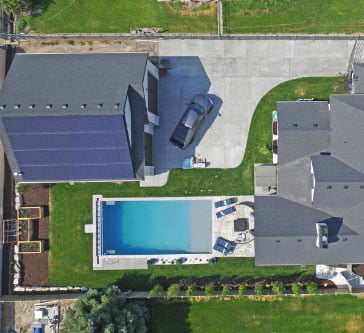
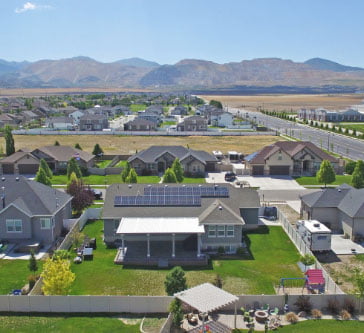
"All of the photos on this website are of real projects that Intermountain Wind & Solar has designed and installed.
We are proud to show off and stand behind our work."