
There are two different types of tax incentives available for solar systems, and the one you claim depends on the type of solar system you are planning to install. Both residential and commercial solar systems installed now offer significant tax benefits, but those incentives are going to change in the coming years. We’ll discuss what you need to know to understand tax credits and avoid missing out on incentives that you are eligible for based on the solar system you get.
Right now the tax incentive for residential and commercial solar arrays are the same. If you install a solar system on your home or business in 2020, you can claim 26% of the cost for your system as a tax credit on your federal tax returns. In 2021, that amount will go down to 22%.
For residential customers, the 26% credit is available to offset any taxes that you might otherwise owe so you can significantly reduce your total tax bill to the IRS. If your credit is larger than the amount you owe, you can also roll over the credit to a future year for up to five years to offset your tax bill. So, for example, if you are a homeowner who spends $15,000 on your solar system, you will get a $3,900 tax credit. If you only need to use $1,000 of that now, you can roll over the other $2,900 to use in one or more future years.
Commercial solar tax credits are likely to be much larger because the systems cost a lot more, so the rules on how you can use the commercial solar credit are different from the residential carryover rules. It’s important to examine those closely to make sure you get the full benefit of your tax incentive.
Starting in 2022, the residential solar tax incentive will disappear entirely. New customers that install a solar system will not be able to claim any federal tax credit, although you may still be able to take advantage of some state or local incentives depending on where you live.
Commercial solar tax incentives starting in 2022 will go down by more than half, from 22% to just 10%. As of right now, the federal governments has indicated that the 10% incentive will remain in place indefinitely, but that may change in the future based on solar prices and adoption rates.
Intermountain Wind and Solar has experts who are ready to help you figure out your tax benefits and get started on your solar project. Talk to us today to learn more.
Commercial solar typically qualifies for a five-year MACRS depreciation schedule. Under the 2025 One Big Beautiful Bill Act, 100% bonus depreciation was permanently restored for qualifying equipment acquired and placed in service after January 19, 2025. Claiming the 30% federal Investment Tax Credit reduces the depreciable basis by half the credit (to about 85% of system cost), and a business can generally deduct that basis in the first year with bonus depreciation, or elect to spread it across the five-year MACRS schedule instead. How these benefits apply depends on your specific tax situation, so confirm the details with a qualified tax professional. For more, see the SEIA MACRS overview and current IRS guidance (Notice 2026-11).
Local incentives vary by state. Utah offers a 6.85% sales tax exemption on equipment. Idaho utilities provide full retail net-metering credits averaging $800–$1,200 in annual savings. Wyoming has no statewide rebate, and Oregon’s Residential Energy Tax Credit covers 25% of system cost up to $6,000.
Commercial solar in the Intermountain West typically pays back in 3–6 years after incentives. For example, a 200 kW system in Utah or Idaho can generate $25,000–$40,000 in annual utility savings, driven by the 30% Federal ITC and accelerated depreciation.
Intermountain Wind & Solar offers cash purchases, solar loans, leases and PPAs. Our bulk-purchase discounts reduce system costs by 5% on projects over 100 kW. We also provide 15-year solar loans starting at 3.99% APR, with payment-to-savings ratios as low as 0.8:1.
Yes. Intermountain Wind & Solar manages all permits, interconnection approvals and utility paperwork in-house across Utah, Idaho, Wyoming and Oregon. Our 100% full-time installation team typically cuts 2–4 weeks off project timelines by avoiding permit delays.





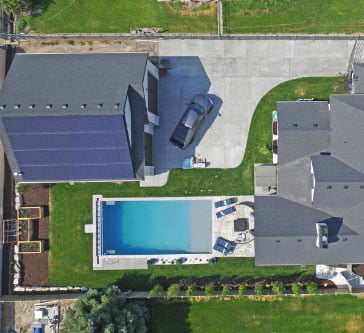
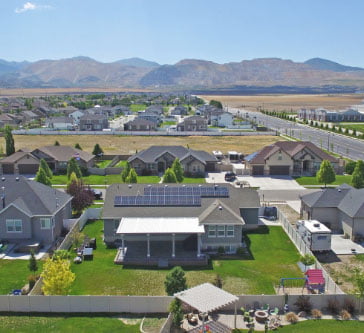
"All of the photos on this website are of real projects that Intermountain Wind & Solar has designed and installed.
We are proud to show off and stand behind our work."